
To strengthen the planning, registration, and monitoring of public investment under the principles of Shared Prosperity and social well-being, the Government of Mexico issued the Guidelines for the Management Cycle of Investment Programs and Projects carried out by the agencies and entities of the Federal Public Administration, aligned with:
- National Development Plan (PND) 2025–2030: Governing framework for all public investment.
- Programs Derived from the PND: Sectoral and regional strategies.
- Medium-Term Investment Program (PIMEP): Mechanism with a three-year horizon through which agencies must structure and prioritize their interventions. It must be submitted to the Ministry of Finance and Public Credit (SHCP) no later than the last business day of March each year.
The Guidelines define specific stages to ensure comprehensive management:
- Planning: Identification of needs and alignment with Shared Prosperity.
- Registration and Investment Portfolio: Registration process in the Investment Portfolio System (SCI) administered by the SHCP Investment Unit.
- Monitoring: Monthly reporting (within the first 13 calendar days of the following month) on the physical and financial progress of projects under execution.
- Ex-post Evaluation: Analysis of results achieved compared with the original social and economic objectives.
Planning
Planning Levels for Shared Prosperity:
Level 1 |
|
||||
Level 2 |
|
||||
⇑ |
Level 3 |
|
|||
Budgetary Programs |
Level 4 |
|
|||
The management of the PIMEP, derived from the Vision for the Management of Investment Programs and Projects of the Undersecretariat of Expenditures, is established under the following main criteria:
The planning mechanism referred to in Articles 34, Section I, of the Law and 44 of the Regulations shall consist of the PIMEP and shall be managed as follows:
- Agencies and entities of the Federal Public Administration must submit the PIMEP to the Ministry, through the SCI, no later than the last business day of March of each fiscal year.
- The PIMEP must include PPIs, as well as, where applicable, those implemented under the Deferred Investment Projects Registered as Expenditure (PIDIREGAS) scheme, public-private partnership projects, and service provision projects (PPS).
- Agencies and entities must identify in the PIMEP a strategic approach consistent with the planning levels for Shared Prosperity and their timeframes, as well as the guiding principles of the PPIs.
For prioritizing PPIs according to project execution order, the following are considered:
- Socioeconomic profitability
- Reduction of extreme poverty
- Regional development
- Alignment with other investment programs and projects
Registration
The Portfolio must register actions involving capital expenditures allocated to public infrastructure works and others established in Article 2, Sections XXXVIII and XXXIX of the Law, including:
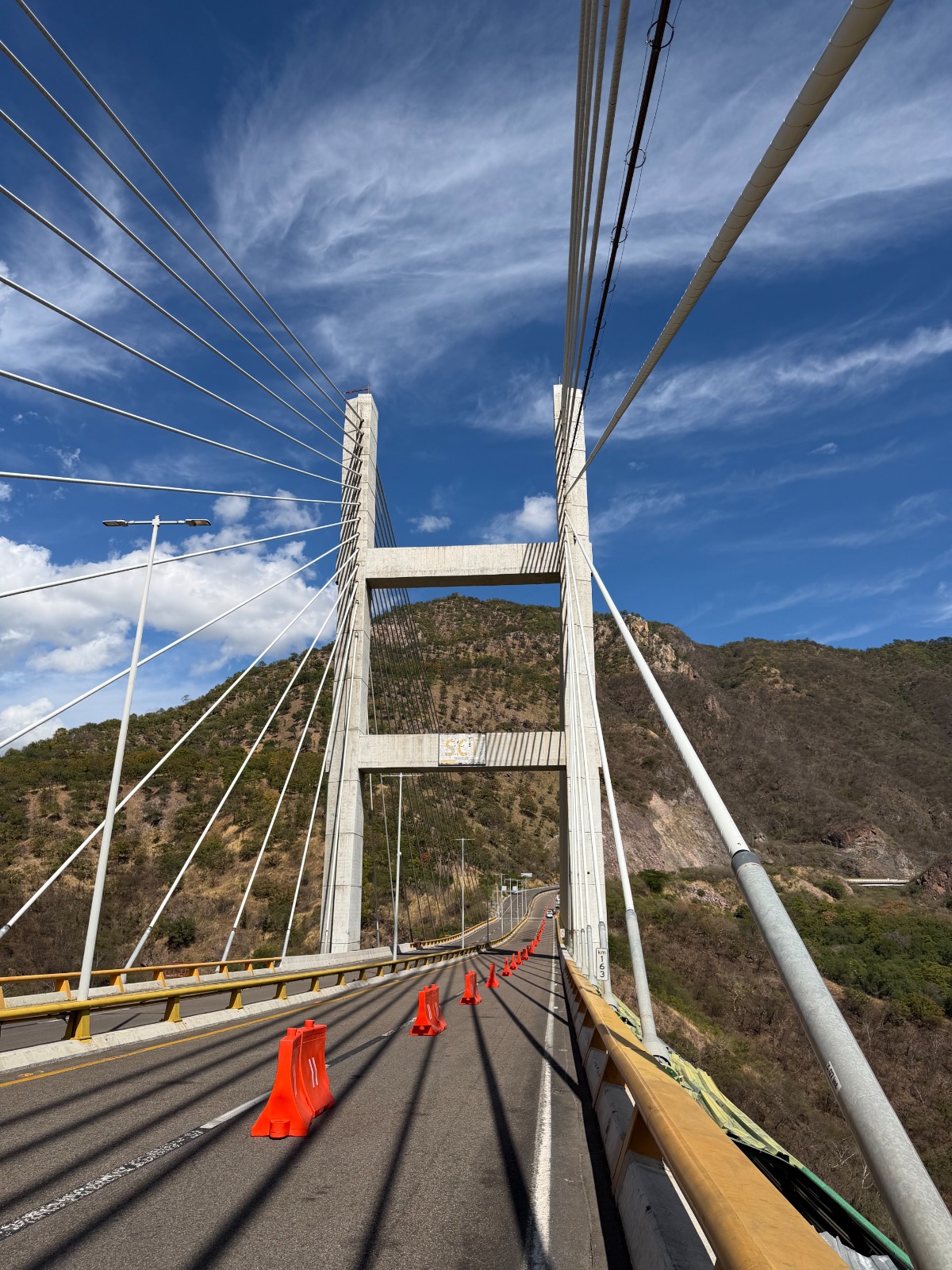
| PND 2025–2030 AXIS | PUBLIC POLICY SECTOR | INFRASTRUCTURE AND PUBLIC WORKS PROJECTS |
| General Axis 1: Governance with Justice and Citizen Participation | Government and Security | 1. Government infrastructure |
| 2. Penitentiary and judicial infrastructure | ||
| 3. National security infrastructure | ||
| 4. Public security infrastructure | ||
| 5. Emergency response and civil protection infrastructure | ||
| General Axis 2: Development with Well-being and Humanism | Health and Social Security | 6. Comprehensive infrastructure for the right to health |
| 7. Infrastructure for assistance and social security | ||
| Well-being, Education, and Culture | 8. Infrastructure for the right to education | |
| 9. Infrastructure for the right to culture | ||
| 10. Social and community infrastructure | ||
| 11. Sports infrastructure | ||
| 12. Infrastructure for research, science, and technology | ||
| Territory and Housing | 13. Territorial development infrastructure | |
| 14. Infrastructure for the right to housing | ||
| General Axis 3: Moral Economy and Labor | Economic Development and Communications | 15. National tourism infrastructure |
| 16. Highway and road infrastructure | ||
| 17. Infrastructure for sustainable rural development and food sovereignty | ||
| 18. Infrastructure for economic promotion, innovation, and development | ||
| 19. Railway infrastructure for freight and passenger transport | ||
| 20. Mass passenger transportation infrastructure | ||
| 21. Maritime-port infrastructure | ||
| 22. Naval infrastructure | ||
| 23. Airport infrastructure | ||
| General Axis 4: Sustainable Development | Energy and Sustainability | 24. Electricity infrastructure |
| 25. Hydrocarbon infrastructure | ||
| 26. Hydro-agricultural infrastructure, modernization, and flood protection | ||
| 27. Drinking water, sewerage, and sanitation infrastructure | ||
| 28. Environmental infrastructure | ||
| 29. Climate resilience infrastructure | ||
| 30. Solid waste and recycling infrastructure | ||
| 31. Renewable energy infrastructure | ||
| Cross-cutting Axis 2: Public Innovation for National Technological Development | Digital Infrastructure and Telecommunications | 32. Digital and telecommunications infrastructure |
| 33. Aerospace infrastructure |
For purposes of registering new PPIs in the Portfolio, the Cost-Benefit Evaluation referred to in Article 34, Section II, of the Law shall be processed through the SCI using the Strategic Assessment Form (FIVE), which shall incorporate information generated across the various planning levels for Shared Prosperity 2025–2030 within the corresponding agency or entity.
The type of FIVE shall apply according to investment amounts:
|
Registration |
||
|
PPI |
PPI Amount |
Type of FIVE |
| Investment Programs and Projects | Up to800 million MXN | Strategic Assessment Form Simplified (FIVE-S) |
| More than 800 million MXN | Strategic Assessment Form (FIVE) | |
Information Requirements for the FIVE:
| 1. General Information on the PPI
2. PPI Classification: Type of PPI 3. Total Investment Amount and Breakdown 4. Strategic Planning and National Priorities 5. Classification and Complementarity |
6. Beneficiary Population
7. Social Benefit Generated 8. Indicators and Risks 9. PPI Administrator 10. Conclusions |
Expert Opinion:
May be required for PPIs which, according to their nature and scope, are determined by the Investment Unit and whose investment amounts exceed 1.5 billion MXN. Such determination shall be communicated through the SCI.
Monitoring
Monitoring of investment execution shall be carried out through the Investment Programs and Projects Monitoring Module (MSPPI) and shall apply to all PPIs, PIDIREGAS, and public-private partnership projects financed with federal public resources.
Agencies and entities of the Federal Public Administration, must submit their Execution Program to the Ministry through the MSPPI, no later than the last business day of January, in accordance with the Law, the Regulations, and these Guidelines.
Agencies and entities must update their Execution Programs whenever modifications to resource allocation occur, no later than the last business day of each month, through the MSPPI.
The physical and financial progress information to be registered includes:
Technical Rules
These establish the technical provisions to be observed by agencies and entities of the Federal Public Administration (APF) in order to carry out, in an orderly manner and in accordance with the Guidelines, the planning, registration, and monitoring activities of Investment Programs and Projects, consistent with the objectives established in the National Development Plan 2025–2030 and under the guiding principle of Shared Prosperity.
|
Section |
FIVE |
FIVE-S |
| 1. General Information on the PPI |
✓ |
✓ |
| 2. PPI Classification: Type |
✓ |
✓ |
| 3. Total Investment Amount and Breakdown |
✓ |
✓ |
| 4. Strategic Planning and National Priorities |
✓ |
✓ |
| 5. Classification and Complementarity |
✓ |
✓ |
| 6. Beneficiary Population |
✓ |
✓ |
| 7. Social Benefit Generated | ||
| General Description |
✓ |
✓ (some identified benefits may not be quantified) |
| Public Value (PPI level) |
✓ |
✓ (mapping without estimates by dimension) |
| Net Public Value (national/regional level contributing to Shared Prosperity) |
✓ |
✕ |
| Reasonable Assumptions |
✓ |
✓ |
| Net Public Value (Descriptive) |
✕ |
✓ |
| Contribution to Regional Development |
✓ |
✓ |
| Expected Effects by Dimension |
✓ |
✓ (At least two dimensions) |
| Mapping of Studies, Permits, and Authorizations |
✓ |
✕ |
| 8. Indicators and Risks |
✓ |
✓ (Only 1 indicator and 1 risk) |
| 9. PPI Administrator |
✓ |
✓ |
| 10. Conclusions |
✓ |
✓ |

Operational Flow
These establish the technical provisions to be observed by agencies and entities of the Federal Public Administration (APF) in order to carry out, in an orderly manner and in accordance with the Guidelines, the planning, registration, and monitoring activities of Investment Programs and Projects, consistent with the objectives established in the National Development Plan 2025–2030 and under the guiding principle of Shared Prosperity.
|
1 |
2 | 3 |
4 |
|||
|
Agencies and entities request registration in the Portfolio |
Preparation of the FIVE or FIVE-S ► |
Validation of the strategic contribution of the PPI — Positive Outcome |
Positive Outcome ► |
Validation of the feasibility of the PPI budget allocation |
Positive Outcome ► |
Authorization of PPI registration in the Portfolio |
|
|
UPER | UDPCSG |
UI |
Sectors

Airports

Water

Highways and Bridges

Electricity

Railways

Hydrocarbons

Ports

Solid Waste

Telecommunications

Urban transport