Last review: September, 2026
Banobras offers interested parties information on the sector in Mexico with data from various sources in order to provide knowledge and useful elements for decision-making on the subject. The content presented does not reflect the position of Banobras.
DOF: Agreement issuing the Operating Guidelines of the “Universal Health Service Clinics” Program for Fiscal Year 2026 (September, 2026). Consult
Projects
Projects under development (pre-investment, bidding, and execution) and operational projects available on the Projects Mexico platform that, at some stage, were considered investment opportunities and do not necessarily include Banobras participation.
Projects under development
| Project | Sector | Subsector | Stage | Sustainability | With Ally Networks |
|---|---|---|---|---|---|
| 1125 Community hospital in Atlixtac, Guerrero | Social Infrastructure | Health | Execution | No | Yes |
| 1077 Second-level care hospital in the municipality of Ures, Sonora | Social Infrastructure | Health | Execution | No | Yes |
| 1066 General Hospital “Dr. Gonzalo Castañeda Escobar”, Tlatelolco, Mexico City | Social Infrastructure | Health | Execution | No | Yes |
| 1063 General Hospital in Cancun, Quintana Roo | Social Infrastructure | Health | Execution | No | Yes |
| 1053 General Zone Hospital in Manzanillo, Colima | Social Infrastructure | Health | Execution | No | Yes |
| 1052 Hospital Clinic in Cherán, Michoacán | Social Infrastructure | Health | Execution | No | Yes |
| 1050 Regional General Hospital in Morelia, Michoacán | Social Infrastructure | Health | Execution | No | Yes |
| 1008 Regional High Specialty Hospital in San Lorenzo Cacaotepec, Oaxaca | Social Infrastructure | Health | Execution | No | Yes |
Projects in operation
| Project | Sector | Subsector | Stage | Sustainability | With Ally Networks |
|---|---|---|---|---|---|
| 0790 Zumpango High Speciality Regional Hospital | Social Infrastructure | Health | Operation | Yes | Yes |
| 0371 Bajio Hospital | Social Infrastructure | Health | Operation | Yes | No |
| 0370 Ciudad Victoria Hospital | Social Infrastructure | Health | Operation | Yes | No |
| 0368 Ixtapaluca Hospital | Social Infrastructure | Health | Operation | Yes | No |
| 0005 General Hospital in the Mexico City South Regional Delegation (Tlahuac) | Social Infrastructure | Health | Operation | Yes | Yes |
Current status
The National Health System is made up of federal and state institutions, as well as specialized agencies that coordinate the provision of medical services, disease prevention, epidemiological surveillance, and health regulation in Mexico. Its objective is to guarantee timely access to quality health services for the entire population.
According to the 2025-2030 Health Sector Program, national priorities are focused on expanding healthcare coverage, strengthening the problem-solving capacity of health institutions, ensuring the supply of medicines and medical supplies, reducing access gaps between regions, and modernizing the country’s healthcare infrastructure.
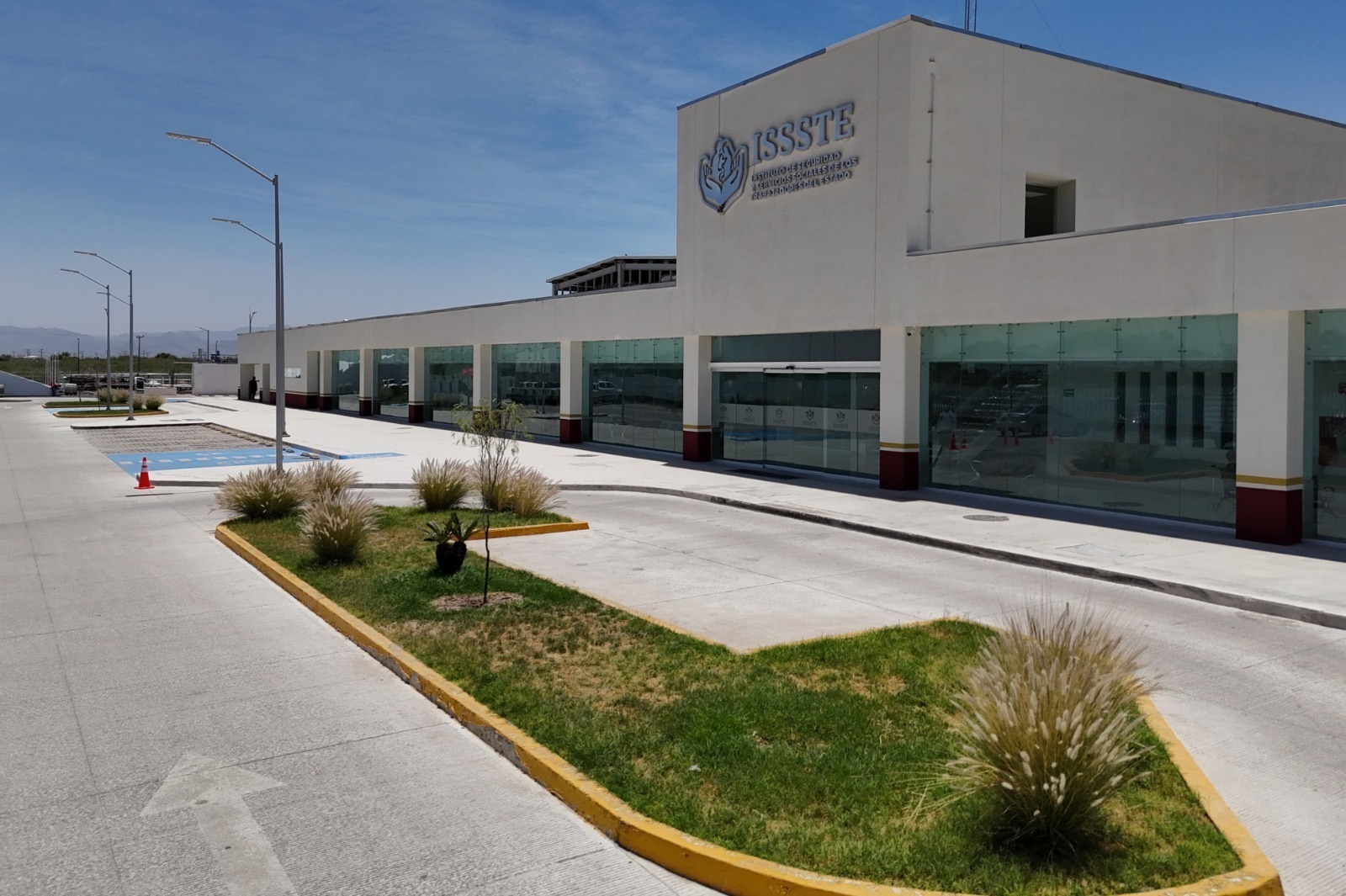
ISSSTE, Torreón Regional High Specialty Hospital
Medical Infrastructure
Healthcare infrastructure is one of the main pillars for guaranteeing universal access to health services and strengthening the care capacity of the National Health System. Within the framework of the 2025-2030 Health Sector Program, infrastructure actions are aimed not only at the construction, expansion, or rehabilitation of medical facilities, but also at reducing healthcare deserts, strengthening the problem-solving capacity of primary healthcare services, expanding coverage in rural and marginalized areas, and promoting remote care mechanisms through telehealth and telemedicine.
As part of this strategy, the Government of Mexico is promoting the National Hospital Infrastructure Plan, which contemplates the implementation of 152 hospital projects by 2030, including the construction of 50 new hospitals, 47 expansions, and 55 replacements or major upgrades. These actions represent an estimated investment of 181 billion pesos and will increase the installed capacity of the healthcare system, expanding from 96,966 to 106,105 hospital beds nationwide.
Healthcare Infrastructure
Healthcare infrastructure is one of the main pillars for ensuring universal access to healthcare services and strengthening the National Health System’s capacity. Under the 2025–2030 Health Sector Program, infrastructure actions focus not only on constructing, expanding, and rehabilitating medical facilities but also on reducing underserved areas, strengthening primary healthcare capacity, expanding coverage in rural and marginalized communities, and promoting telehealth and telemedicine services.
As part of this strategy, the Government of Mexico is implementing the National Hospital Infrastructure Plan, which includes 152 hospital projects by 2030, consisting of 50 new hospitals, 47 expansions and 55 replacements or major upgrades. These initiatives represent an estimated investment of 181 billion pesos and will increase national hospital capacity from 96,966 to 106,105 hospital beds. Consult
Planning for these investments is carried out through the Master Plan for Physical Health Infrastructure (PMIFS), an instrument that identifies healthcare infrastructure and medical equipment needs based on service demand and guides public investment in the health sector.
Installed Capacity
The public health network has more than 20,500 outpatient care facilities distributed throughout the country, including health centers, family medicine clinics, specialized medical offices, and community healthcare units. In addition, it has:
- 86,304 medical consulting rooms
- 4,495 operating rooms
- 150,148 hospital beds
- 483 CT scanners
- 148 magnetic resonance imaging (MRI) units
- 763 mammography units
- 84 linear accelerators for cancer treatment
This infrastructure makes it possible to meet the healthcare needs of a growing population. However, challenges remain regarding the territorial distribution of services, the modernization of facilities, and the replacement and upgrading of specialized medical equipment.
Private Sector Participation
According to the 2025 Health Statistics in Private Healthcare Establishments published by INEGI (National Institute of Statistics and Geography), Mexico’s healthcare system is complemented by significant participation from the private sector, particularly in hospital services, clinical diagnostics, and specialized care.
At the end of 2025, there were 2,689 private healthcare establishments operating in the country, with more than 35,000 inpatient beds. These facilities strengthen the installed capacity of the national healthcare system and expand healthcare options available to the population.
Institutional Arrangement
Mexico’s health sector has an institutional and planning framework that coordinates the participation of the three levels of government and various stakeholders to improve healthcare infrastructure and medical equipment, strengthen the supply of medicines, and modernize healthcare services, with the goal of ensuring universal, free, and high-quality healthcare.
To access additional information, please consult the following documents:
Health Sector Program 2025–2030
Master Plan for Physical Health Infrastructure (PMIFS)
National Healthcare Infrastructure Action Compendium under the Master Plan for Physical Health Infrastructure
Organizational Structure
Description of the hierarchy and roles of the various entities and actors involved in the sector, including how the different institutions and bodies coordinate and collaborate.
Legal system
The legal framework governing Mexico’s health sector establishes the constitutional right to health protection through mandatory laws, programs, and procedures.
The main legal instruments include:
General Health Law
Social Security Law
Law of the Institute for Social Security and Services for State Workers (ISSSTE)
Public Works and Related Services Law
Investment cycle

Banobras
The National Bank for Public Works and Services (Banobras) participates in financing infrastructure projects in Mexico.
Banobras supports the development of infrastructure and public services by providing financing solutions, guarantees, and technical assistance for both public-sector and public-private investment projects.
Project Financing: This financing instrument is designed for infrastructure and public service projects with independent revenue streams capable of servicing debt obligations, including concession-based projects, government contracts, and initiatives that generate income through service delivery.

Financing for States and Municipalities and Decentralized Public Organizations: Banobras’ products and services are tailored to address the infrastructure requirements of state and municipal governments, as well as their decentralized public entities, with the aim of improving citizens’ quality of life and strengthening economic competitiveness.
To support these objectives, Banobras provides the following financing mechanisms:
Products:
Project Development: Banobras offers services aimed at assisting public sector agencies and entities in the development of infrastructure projects.
Financial structuring of the project:
- Elaborate and/or update studies required by the Public-Private Partnerships Law.
- Support in the review of the bidding conditions and contract model.
- Assist in obtaining financing for the project.
- Assist in the registration process of the project in the portfolio of the Investment Unit of the Ministry of Finance and Public Credit (SHCP).
- Assist in dealing with any observations made by the SHCP Investment Unit.
- Support in the financial closing of the project.
Sustainability
Banobras makes available to interested parties, analysis sheets for the detection of sustainability practices in infrastructure projects, in accordance with the methodological framework “Attributes and Framework for Sustainable Infrastructure” of the Inter-American Development Bank (IDB). Its objective is to highlight sustainable practices, encourage their adoption in future projects and provide relevant information for investors in their economic, environmental, social and institutional dimensions.
To review the projects that already have a sustainability record, select the “SEARCH CRITERIA>” option in the PROJECTS section, and then select “With Sustainability Analysis” at the end of the criteria; the projects that have a record will be displayed below.
In addition, Banobras offers an analysis tool that presents the potential relationship of the different infrastructure projects of the Mexico Projects platform with the 17 Sustainable Development Goals (SDGs) of the 2030 Agenda and their targets. This comparative analysis facilitates the use of data according to different criteria, such as the potential impact of projects and sectors against national and global development goals.
The comparison is only made between projects in the same subsector. To select and consult here.
The alignment of a project with the SDGs provides information on the degree of focus on sustainability; it provides a comparison between projects in the same sector and sub-sector and facilitates investment decisions, showing the highest and lowest alignment of projects to the SDGs. Comparative analysis facilitates the use of data according to different criteria, such as the potential impact of projects and sectors against national and global development goals.
In the case of the sector, 5 projects are identified in the platform that have sustainability practices detection sheets, which allows to know, among other things, the projects with more and better alignments to the SDGs. For more information, access the Sustainable Development Goals application:

Highest alignment:
- SDG 9: Industry, Innovation and Infrastructure.
- SDG 8: Decent Work and Economic Growth.
- SDG 3: Good Health and Well-being.
Lowest alignment:
- SDG 17: Partnerships for the Goals.
- SDG 14: Life Below Water.
- SDG 4: Quality Education.
Ally Networks
Banobras, through its Ally Networks application, provides information on companies participating in competitive public procurement processes for infrastructure projects in Mexico, based on official sources such as ComprasMX. It includes details on investment amounts, number of participations in bids, projects awarded, consortiums, and business associations, which allows the user to identify potential actors for the establishment of investments in the country.
To consult the projects that have information on the participating companies, select the option “SEARCH CRITERIA>” in the PROJECTS section, and then select “With applicant companies” at the end of the criteria.
In the application, you can consult on the sector:
- 13 projects
- 51 companies
- 20 consortiums
Reference documents:
This section offers documents, reports and reports with technical, statistical and regulatory information on the sector:
Official statements:
2026
- 09/28/2026 Official Gazette (DOF): Agreement issuing the Operating Guidelines of the “Universal Health Service Clinics” Program for Fiscal Year 2026.
- 08/10/2026 Official Gazette (DOF): Agreement issuing the Guidelines for obtaining the Registration Number in the National Master Plan for Health Infrastructure and High-Technology Medical Equipment.
- 08/10/2026 SICT: SICT to build 43 IMSS Child Education and Care Centers (CECI).
- 06/04/2026 IMSS: SICT and IMSS sign a framework agreement for the construction of early childhood education and care centers.
- 05/07/2026 SICT: SICT Authorized to Carry Out Infrastructure Works Related to the Health Sector
- 01/14/2026 IMSS: Building one thousand early childhood education and care centers an IMSS commitment to early childhood and working women.
Additional information:
2026